Blog & News
The latest scientific articles and news from the world of stem cell applications, genetics, and biotechnology.
What Is the Autologous NK Cell Approach? A Person’s Own NK Cells
Autologous NK cells are cells obtained from a person's own immune system and investigated in cellular immunotherapy research. This article discusses the biological characteristics, manufacturing processes, and quality assessment criteria of autologous NK cells.
Read Article
What Are NK Cells? The Role of Natural Killer Cells in the Immune System
Natural Killer (NK) cells are immune cells involved in the recognition of virus-infected cells and cells undergoing tumor development. In this article, we examine how NK cells work, what autologous NK cells mean, and their role in cellular immunotherapy research.
Read Article
The Future of Fibroblast Research in Regenerative Dermatology
Fibroblasts play important roles in maintaining the structure of skin tissue, producing collagen, and repairing tissue. In this article, we examine current research areas in fibroblast biology and the scientific significance of these studies for regenerative dermatology.
Read Article
10 Questions About Fibroblast-Based Cellular Products
Cell source, quality control, storage conditions, and safety are important considerations when evaluating fibroblast-based cellular products. In this article, we address the biological role of fibroblasts and how cellular products should be scientifically evaluated through 10 questions.
Read Article
Why Is Cell Quality Important in Fibroblast Products?
Cell identity, viability, purity, and microbiological safety are important quality criteria in the evaluation of fibroblast-based cellular products. In this article, we examine why quality control processes are necessary and the difference between laboratory data and clinical evidence.
Read Article
Differences Between Autologous and Allogeneic Fibroblasts
Autologous and allogeneic fibroblasts differ according to the source from which the cells are obtained. In this article, we examine the production processes of these two approaches, the characteristics that need to be evaluated from a biological perspective, and the key differences to consider in clinical use.
Read Article
The Relationship Between Fibroblasts and Collagen: The Scientific Mechanism
Fibroblasts contribute to maintaining tissue integrity through collagen production and regulation of the extracellular matrix. In this article, we examine the fundamental mechanisms underlying the relationship between fibroblasts and collagen, their role in tissue repair, and their association with excessive collagen accumulation in light of scientific sources.
Read Article
How Are Fibroblast-Based Cellular Products Evaluated?
When evaluating fibroblast-based cellular products, cell source, quality control, safety, and clinical evidence should be considered together. This article discusses the key points to consider when assessing these products from scientific and regulatory perspectives.
Read Article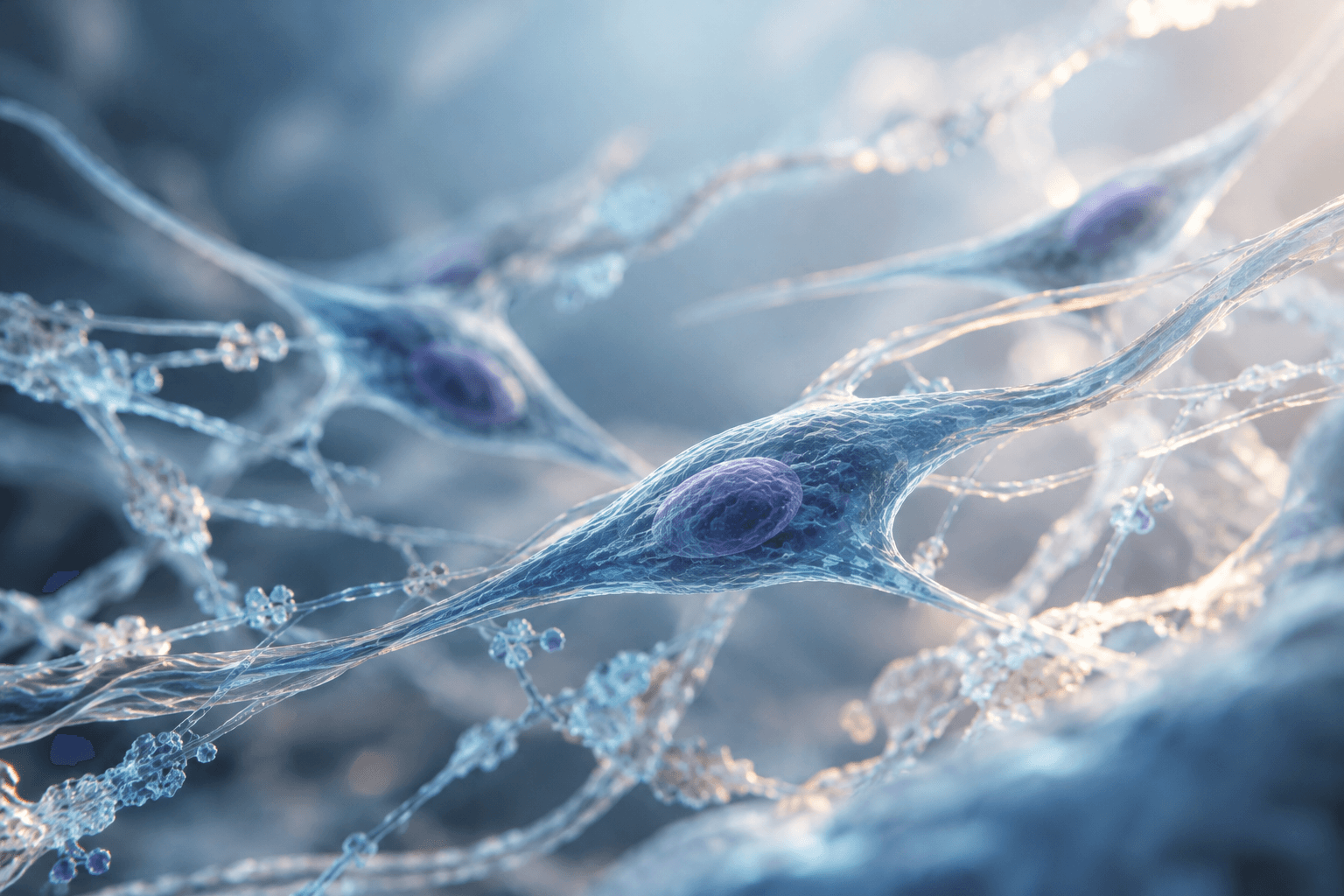
What Is a Fibroblast? Its Role in Connective Tissue and the Extracellular Matrix
Fibroblasts are important cells that maintain the structure of connective tissue and contribute to wound healing processes. In this article, we examine their role in extracellular matrix production and tissue repair in light of scientific sources.
Read Article