What Are NK Cells? The Role of Natural Killer Cells in the Immune System
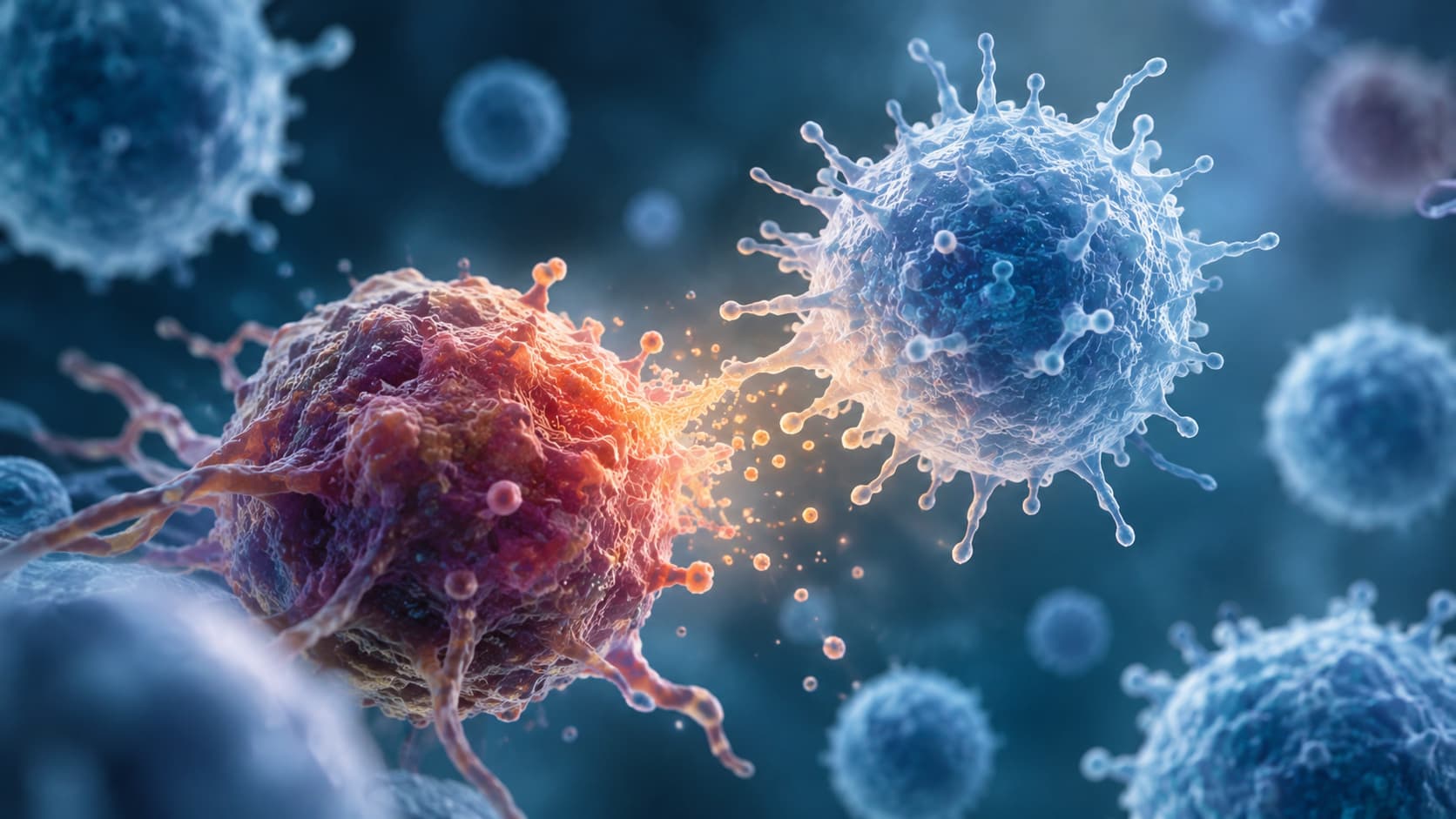
What Are NK Cells?
Natural Killer (NK) cells are lymphocytes that are important components of the innate immune system. They play a role particularly in the recognition and elimination of virus-infected cells and cells undergoing tumor development.
How Do NK Cells Work?
NK cells assess signals on the surface of target cells through their activating and inhibitory receptors. The balance between these signals determines whether the cell will mount a response against the target.
When a response is triggered against a target cell, NK cells can initiate target cell death by releasing cytotoxic molecules such as perforin and granzymes. They also contribute to the regulation of the immune response by producing cytokines such as interferon-gamma (IFN-γ).
What Do Autologous NK Cells Mean?
Autologous NK cells refer to Natural Killer cells obtained from a person's own cells. This term indicates the source of the cells; on its own, it does not demonstrate the clinical efficacy or safety of a product.
When evaluating a product, factors such as the cell source, manufacturing and processing methods, cellular characteristics, quality control results, and intended use should be taken into consideration.
NK Cells and Cellular Immunotherapy
Due to their ability to recognize target cells and generate cytotoxic responses, NK cells are being investigated in cellular immunotherapy research. Studies in this field evaluate different NK cell sources, activation and manufacturing methods, and clinical approaches.
However, laboratory and early-phase clinical research results do not mean that an approach has been accepted as a standard treatment. Clinical efficacy and safety should be evaluated through human studies conducted for the relevant product and intended use.
Conclusion
NK cells play important roles in cellular defense and immune regulation within the innate immune system. Research in cellular immunotherapy aims to better understand the biological characteristics and clinical potential of these cells.
This content is for informational purposes only; it does not provide a diagnosis, recommend treatment, or promise outcomes. Always consult a physician for an individualized assessment.