Differences Between Allogeneic and Autologous NK Cells
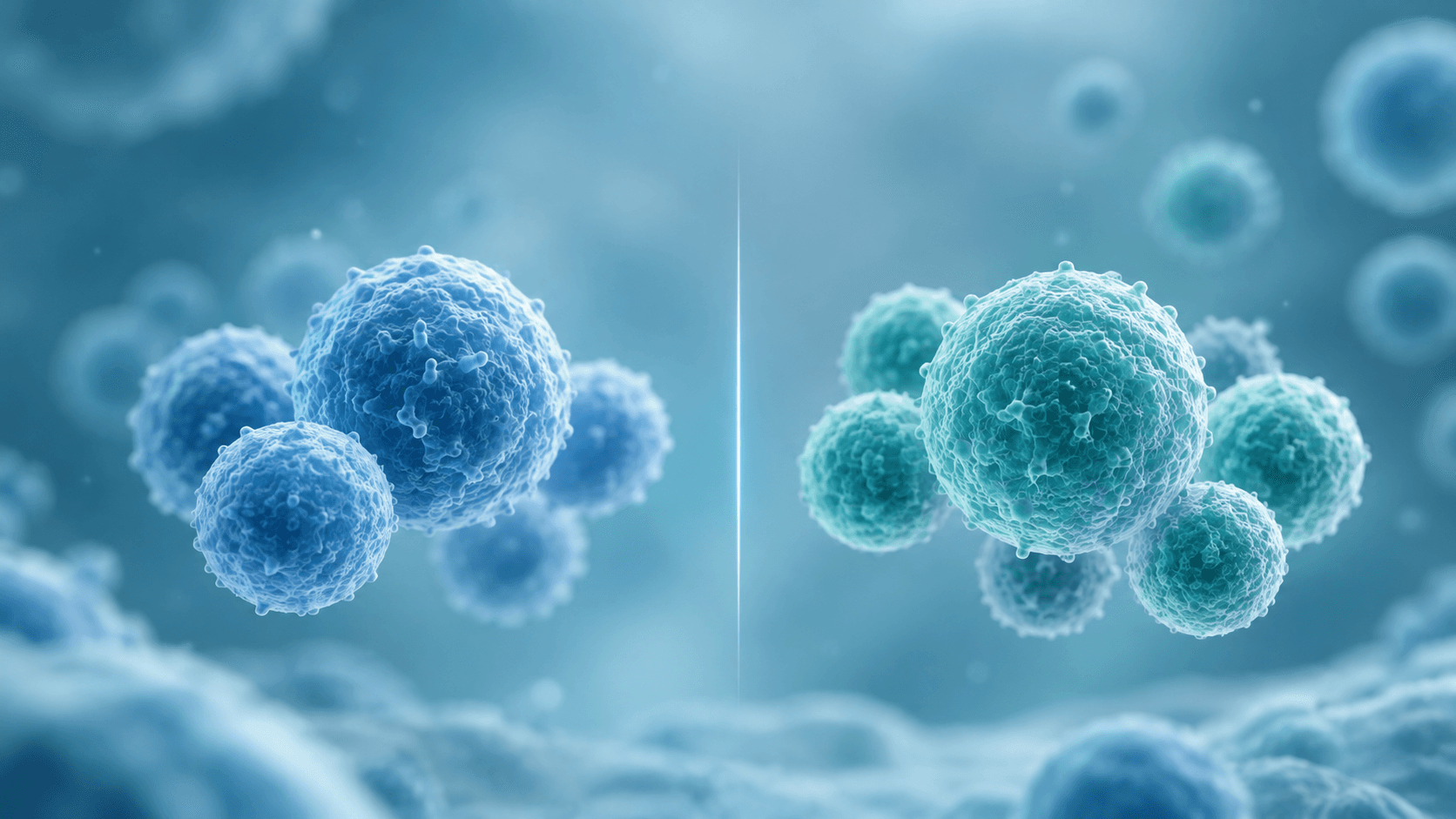
What Are Allogeneic and Autologous NK Cells?
Natural Killer (NK) cells are lymphocytes that are part of the innate immune system. In cellular immunotherapy research, NK cells are classified as autologous or allogeneic according to their source.
Autologous NK cells are obtained from a person's own blood, whereas allogeneic NK cells are obtained from another donor.
Key Differences
The main differences between the two approaches concern cell source and the production process.
Autologous NK cells: Obtained from the patient's own cells. Cell collection, isolation, and expansion processes are carried out for the individual concerned.
Allogeneic NK cells: May be obtained from a healthy donor or suitable cellular sources. Products that can be cryopreserved after production and expansion may be developed for use in multiple patients under appropriate conditions.
Production and Quality Assessment
The production process and final product quality are important in both cell approaches. Cell identity, purity, viability, functional characteristics, and microbiological safety assessments are fundamental components of product characterization.
In allogeneic products, donor selection and donor-related variability are taken into consideration, whereas in autologous products, the characteristics of the starting cells obtained from the patient are considered.
Evaluation in Terms of Clinical Research
Autologous and allogeneic NK cells are being investigated as different approaches in the field of cellular immunotherapy. The impact of cell source on clinical outcomes should be evaluated together with the production method, cellular characteristics, patient factors, and the applied protocol.
Therefore, whether sufficient clinical evidence exists to establish a definitive superiority between the two approaches should be examined for each specific product and indication.
Frequently Asked Questions
What is the main difference between autologous and allogeneic NK cells?
Autologous NK cells are obtained from a person's own cells, whereas allogeneic NK cells are obtained from another donor.
Can allogeneic NK cells be prepared in advance?
Some allogeneic NK cell platforms are being developed to allow production and cryopreservation in advance.
Which approach is more effective?
Effectiveness should be evaluated based on the characteristics of the product and clinical research results, independently of the cell source.
Are the quality criteria the same for both approaches?
The fundamental quality assessments cover similar areas. However, depending on the cell source, different requirements may apply, such as donor screening or evaluation of the starting material obtained from the patient.
This content is intended for informational purposes only; it does not provide a diagnosis, recommend treatment, or guarantee outcomes. Please consult a physician for an individualized assessment.